Web Marketing Service Guide: Strategies for Success in 2026
The digital world is evolving at a rapid pace, and by 2026, the demands on businesses will be higher than ever. Brands face fierce competition, changing consumer expectations, and the constant pressure to innovate.
To succeed, you need a dynamic web marketing service that adapts to new trends and technologies. Staying ahead means embracing fresh strategies that drive conversions, build loyalty, and set your brand apart.
This guide is designed to equip you with the latest strategies, trends, and proven frameworks for web marketing service success. We’ll cover emerging industry trends, the essential pillars of web marketing, step-by-step planning, and expert recommendations to help you thrive in 2026.
The State of Web Marketing Services in 2026
The web marketing service landscape is transforming rapidly as we approach 2026. Businesses are navigating a digital environment shaped by evolving consumer expectations, advanced technologies, and new competitive dynamics. Staying ahead means understanding these shifts and adapting strategies to meet both challenges and opportunities.

Evolving Consumer Behaviours
In 2026, consumer behaviours are driving major changes in web marketing service delivery. Hyper-personalisation is now the norm, with AI-powered recommendations tailoring every touchpoint. Users expect seamless, omnichannel experiences, moving fluidly between devices and platforms.
Mobile-first browsing and voice search dominate, prompting brands to optimise for speed and conversational queries. According to industry reports, 70% of users expect brands to anticipate their needs, making predictive engagement vital for any web marketing service.
Data privacy is a top concern, with consumers demanding transparency and control. Gen Z and Alpha generations are shaping digital spending patterns, favouring brands that embrace short-form video and social commerce. Case studies show that brands prioritising these formats see up to 30% higher engagement, reinforcing the need for a strategic, consumer-centric web marketing service.
Key Technology Shifts Shaping Web Marketing
Technology is reshaping every aspect of web marketing service strategies. AI-powered automation is streamlining campaign management and content creation, allowing teams to focus on strategy and creativity. The integration of AR and VR delivers immersive brand experiences, while advanced analytics platforms provide real-time insights for agile decision-making.
No-code and low-code tools are empowering marketers to launch campaigns faster than ever. The rollout of 5G is improving content delivery, making rich media and instant interactions standard. Chatbots and AI assistants are reducing response times by 50%, enhancing customer satisfaction.
Marketers are also shifting towards cookieless tracking and first-party data strategies, responding to changing privacy laws. For a deeper dive into the latest innovations and the rise of video-commerce, see this Digital Marketing Trends for 2026 resource.
Service Provider Landscape: What’s Changed?
The web marketing service provider landscape is evolving. Boutique agencies and specialised providers are gaining ground, offering highly tailored solutions. Businesses are weighing the benefits of in-housing versus outsourcing, with many seeking holistic, full-funnel approaches.
Performance-based service models are becoming popular, as brands demand clear ROI and transparent reporting. Integrated agencies offering SEO, paid media, and CRO consistently outperform single-channel providers, delivering more comprehensive results.
Clients now expect regular, accountable reporting and a focus on measurable outcomes. Certifications, industry partnerships, and a track record of success are key factors in selecting the right web marketing service provider.
Challenges and Opportunities in 2026
Web marketing service teams face both challenges and exciting opportunities. Navigating frequent platform algorithm updates, from Google to Meta and TikTok, requires agility and constant learning. Regulatory changes around privacy and data compliance demand proactive adaptation.
Emerging channels like shoppable livestreams offer new avenues for engagement and sales. The main challenge is balancing powerful automation with an authentic brand voice. Brands are combining AI-driven segmentation with human-led creative to stand out.
Competition for consumer attention is intense, making efficiency and creative differentiation more important than ever. The most successful web marketing service providers will be those who can adapt quickly, leverage new technologies, and maintain a genuine connection with their audience.
Core Pillars of a Successful Web Marketing Service Strategy
To excel in 2026, every web marketing service must be built on a set of core pillars. These pillars ensure your strategy adapts to rapid changes, meets customer expectations, and delivers measurable growth. Let’s break down each pillar and see how they work together for lasting success.

Search Engine Optimisation (SEO) in 2026
SEO remains a foundation for every web marketing service. In 2026, AI-driven SEO tools are essential for content optimisation, enabling brands to target conversational queries and voice search. E-E-A-T factors—experience, expertise, authoritativeness, and trustworthiness—are more important than ever, influencing rankings and consumer trust.
Local SEO and hyperlocal targeting allow service businesses to stand out in competitive markets. Adapting to ongoing algorithm updates is critical, as is prioritising technical SEO and site performance. For example, businesses updating their content for natural language queries are seeing up to 20 percent traffic growth.
If you want to explore how these pillars come together in a full-service approach, check out the Web marketing services overview.
Paid Media & Performance Marketing
Paid media is rapidly evolving. Cross-channel strategies now span Google Ads, Meta, TikTok, and LinkedIn, with automation and smart bidding driving efficiency. Attribution modelling is shifting as third-party cookies disappear, so brands must refine their approach to measuring success.
Creative personalisation at scale is now possible, unlocking higher returns on ad spend. Integrating paid and organic campaigns has become a best practice for web marketing service providers. Dynamic product ads and advanced retargeting boost campaign relevance, while budget allocation for new ad formats keeps you ahead of the curve.
Social Media & Influencer Marketing
Social platforms continue to diversify, and a strong web marketing service must look beyond Facebook and Instagram. TikTok, Threads, and even BeReal are growing in importance, especially for younger audiences. Community-driven campaigns and micro-influencers help brands build trust and foster engagement.
User-generated content (UGC) acts as social proof, while social commerce features make it easy for users to purchase directly from their feeds. Brands running social-first campaigns are achieving three times greater engagement rates, proving the value of a balanced paid and organic presence.
Conversion Rate Optimisation (CRO) & UX
CRO and user experience are tightly linked pillars in any web marketing service. Data-driven A/B testing and personalisation help refine landing pages and sales funnels. Mobile UX and instant checkout options are now baseline requirements, with frictionless navigation driving higher conversions.
Integrating CRO with SEO and paid strategies ensures a seamless journey from discovery to purchase. Accessibility and inclusive design are essential, opening your brand to wider audiences. For instance, reducing checkout steps can increase conversions by 18 percent, providing a strong case for ongoing UX improvements.
Data & Analytics for Decision-Making
Effective data and analytics power every modern web marketing service. Unified dashboards bring together multi-channel results, making it easier to spot trends and opportunities. Predictive analytics, powered by AI, enable faster, smarter decisions while respecting user privacy.
Real-time analytics give teams the agility to iterate quickly, turning insights into action. This approach ensures your campaigns are always optimised for the best possible outcomes.
Step-by-Step Guide: Building Your 2026 Web Marketing Service Plan
Building a future-ready web marketing service plan is essential for brands looking to thrive in 2026. A clear, methodical approach ensures your efforts are focused, measurable, and aligned with fast-changing digital trends. Here’s how to construct a robust plan step by step.

Step 1: Define Clear Business & Marketing Objectives
Start every web marketing service plan by setting specific, measurable, achievable, relevant, and time-bound (SMART) goals. These objectives should directly support your business growth targets, whether that means boosting online revenue, increasing leads, or improving retention.
List the key performance indicators (KPIs) that matter most, such as website traffic, lead generation, sales conversions, or customer loyalty. For example, a service business may aim for a 25 percent year-on-year digital revenue increase.
Map each objective to stages of the customer journey, ensuring you’re nurturing prospects from awareness to loyalty. Engage stakeholders early, so everyone shares the same vision and is committed to success.
Step 2: Audience & Market Research
Understanding your audience is the cornerstone of any successful web marketing service strategy. Start by creating detailed buyer personas using first-party data and insights from your CRM.
Analyse the competition to identify gaps and opportunities. Social listening and sentiment analysis can reveal trending topics and emerging audience interests. AI-powered tools help you spot new segments and anticipate changes in consumer behaviour.
Map out customer pain points and motivations to refine your messaging. For deeper insights into industry trends and evolving strategies, consult resources like the Digital marketing insights blog.
Step 3: Channel & Service Selection
Not every channel suits every brand, so choose your mix strategically. A strong web marketing service plan might combine SEO, paid media, social campaigns, CRO, and email marketing.
Prioritise channels based on where your target audience spends their time and your available budget. If your market skews Gen Z, invest in TikTok and Instagram Reels. For B2B, LinkedIn and email may be more effective.
Aim for an omnichannel approach to keep your messaging consistent across platforms. Decide which activities are best handled in-house and which require agency expertise for optimal results.
Step 4: Crafting the Creative & Content Strategy
Develop a distinctive brand voice and clear creative guidelines for your web marketing service campaigns. Tailor content to each stage of the funnel, from awareness to purchase and retention.
Use AI-assisted content creation to streamline production and increase relevance. Dynamic landing pages, for example, can boost conversions by personalising the user experience.
Plan for a variety of formats, including video, interactive content, and AR or VR experiences. Make sure your creative assets align with your brand’s values and speak directly to your audience’s needs.
Step 5: Implementation & Campaign Launch
With your strategy mapped out, move to execution with agile workflows and strong collaboration. Set up robust tracking, analytics, and conversion goals before launching any campaigns.
Test your creatives and messaging with small groups, refining based on feedback and data. Consider phased rollouts to optimise performance and limit risk. Always ensure compliance with privacy regulations and platform-specific policies for every web marketing service initiative.
A well-structured launch process helps maximise impact and sets the foundation for future improvements.
Step 6: Measurement, Reporting & Iteration
Establish a regular reporting cadence with clear dashboards that make sense of your results. Compare outcomes against benchmarks and KPIs identified earlier in your web marketing service plan.
Use rapid iteration—such as weekly sprints—to test, learn, and refine campaigns. Share learnings across teams to foster a culture of continuous improvement.
Leverage actionable insights from real-time analytics to stay agile and responsive in a fast-moving digital environment. This ongoing optimisation is key to long-term success.
Choosing the Right Web Marketing Service Provider
Selecting the right web marketing service provider is a pivotal decision for any business aiming to thrive in 2026. With an evolving digital ecosystem, brands need partners who not only understand the technical aspects but also align with their long-term vision. Let's break down what to look for and how to make the best choice for your business.
Key Criteria for Selecting a Partner
When evaluating a web marketing service partner, start with proven industry expertise and a track record of measurable results. Look for agencies that provide transparent reporting and open communication, ensuring you always know where your investment stands. Integrated solutions often outperform single-service agencies, so prioritise providers who can deliver across SEO, paid media, CRO, and analytics.
Other essential criteria include flexibility, scalability, and alignment with your brand’s values. An agency that holds certifications or partnerships with platforms like Google or Meta can offer extra assurance. For a deeper understanding of partnership benefits, see Why choose our agency.
A web marketing service provider should also demonstrate accountability, offering clear ROI metrics and access to case studies or references. This foundation sets the stage for a successful, long-term relationship.
The Value of Boutique & Specialised Agencies
Boutique and specialised agencies bring a unique edge to the web marketing service landscape. Their smaller teams often mean more direct access to experts, faster communication, and truly personalised approaches. They tend to have a deep understanding of specific industries, which translates into tailored strategies that drive results.
Clients often report higher satisfaction with boutique partners, especially when agility and creative solutions are priorities. These agencies are typically quicker to adopt new technologies and trends, ensuring your web marketing service stays ahead of the curve.
Choosing a boutique web marketing service agency can be especially beneficial for brands seeking both growth and a strong, authentic brand presence.
Sparrow Digital Consulting: Boutique Solutions for Premium Brands
Sparrow Digital Consulting stands out as a female-led boutique web marketing service agency focused on premium lifestyle and e-commerce brands. Their offering includes Shopify design, Meta ads, and soulful email marketing, all delivered with a blend of high-end aesthetics and conversion-focused strategy.
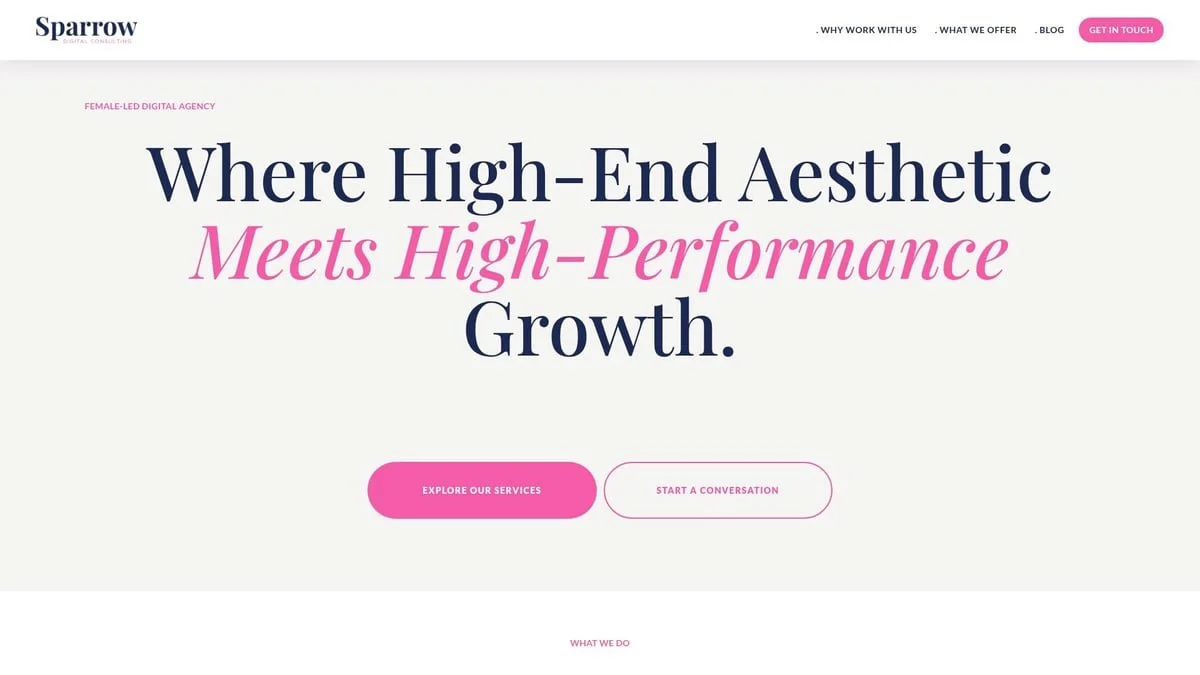
Clients appreciate Sparrow’s seamless integration with their internal teams, collaborative execution, and a strong focus on repeat purchase rates. For those ready to elevate their web marketing service with a boutique touch, Contact Sparrow Digital experts to discuss tailored solutions.
This approach is ideal for businesses wanting measurable growth while preserving their unique brand essence.
Questions to Ask Before Partnering
Before finalising your web marketing service partnership, ask potential agencies about their approach to strategy, measurement, and ongoing support. Can they provide relevant case studies or references? How do they fit into your existing workflows, and what is their policy on transparency and reporting?
Consider agencies that offer trial periods or pilot projects, allowing you to assess their fit before making a long-term commitment. It is also wise to understand how they stay ahead of changing industry trends and ensure flexible communication.
The right web marketing service partner will be proactive, supportive, and aligned with your business goals from day one.
Future-Proofing Your Web Marketing Strategy
Staying ahead in web marketing service means looking beyond today’s tactics and preparing for tomorrow’s landscape. Brands that succeed in 2026 will be those that continuously adapt, experiment, and keep the customer at the centre of every decision.
Embracing Innovation & Experimentation
To future-proof your web marketing service, it’s essential to allocate resources for testing new platforms and creative formats. Early adopters often see outsized returns, with brands that trial AR and VR campaigns reporting higher brand recall.
Encourage your team to experiment with AI-driven tools, beta features, and pilot programs. By staying informed about technological shifts, you can capture opportunities before competitors do. For example, companies leveraging AI's Impact on Marketing ROI are seeing measurable gains in both revenue and efficiency.
Experimentation should be a core value, ensuring your web marketing service remains agile and relevant in a rapidly changing environment.
Building Resilience Against Change
The digital world evolves quickly, and your web marketing service must be ready to adapt. Develop flexible marketing plans that can adjust to algorithm updates or regulatory changes without missing a beat.
Diversification is key. Brands that spread their efforts across multiple channels reduce the risks associated with sudden platform shifts. Invest in upskilling your team and encourage continuous learning so you’re ready for whatever comes next.
Scenario planning can help you anticipate disruptions. By preparing for various outcomes, your web marketing service becomes a resilient force capable of thriving under pressure.
Integrating Customer-Centricity Across All Touchpoints
A successful web marketing service is built around the customer experience. Map out the entire customer journey and identify where personalisation can make the biggest impact.
Omnichannel strategies ensure that your messaging and service delivery are consistent, whether customers engage online, in-store, or via mobile. Brands that focus on seamless interactions across all touchpoints often see a significant increase in customer lifetime value.
Gather feedback regularly and act on it quickly. This ongoing process helps your web marketing service adapt to shifting preferences and keeps your audience loyal.
Sustainability, Ethics & Brand Purpose in 2026
Consumers expect more from brands than just quality products or services. Your web marketing service should reflect genuine commitment to sustainability, ethics, and a clear brand purpose.
Transparent communication about your values and practices builds trust and community. Integrate sustainability into your campaigns, not as an afterthought but as a core part of your offering.
Brands that lead with purpose-driven marketing often experience accelerated growth. By aligning your web marketing service with ethical practices, you create lasting impact for both your business and your customers.
Now that you’ve seen how the right mix of strategy, technology, and creativity can set your brand up for web marketing success in 2026, it’s time to put these insights into action. At Sparrow Digital Consulting, we specialise in helping premium lifestyle brands like yours grow—without losing what makes you unique. From seamless Shopify builds to soulful email campaigns and high-converting Meta ads, we integrate with your team to create experiences your customers will love. If you’re ready to explore how these strategies can work for your business, Explore Our Services and see what’s possible for your next chapter.